

🔧 Part 1: Industry Intelligence Is Here – And It’s Thinking Ahead
Ready to level up your understanding of how AI and IIoT are actually reshaping manufacturing?
This 3-part series dives into what’s driving smarter, more sustainable factory operations in 2025 & beyond —and why it’s not just hype. Part 1 looks at how predictive maintenance is turning smart factories into truly intelligent, self-aware systems. Whether you’re deep in the tech or just trying to future-proof your ops, there’s something here for you.
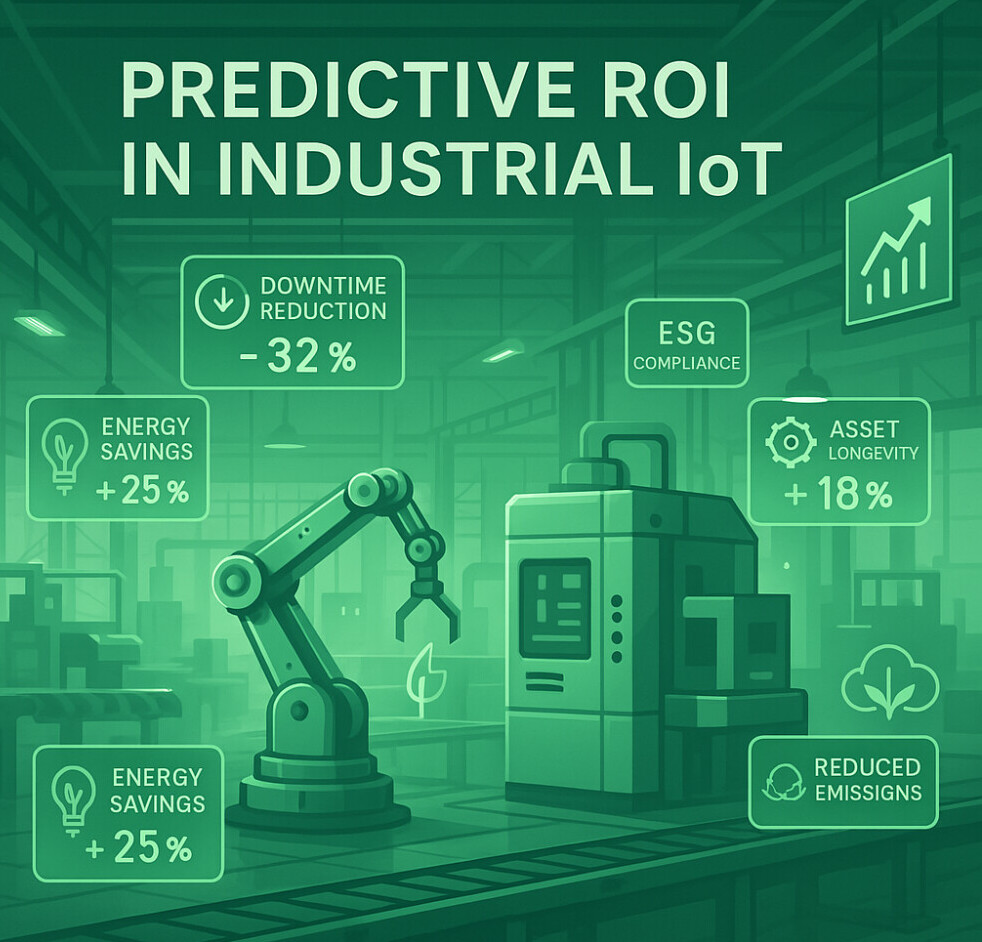
Industry 4.0 has been the buzz for transforming how factories operate, integrating cutting-edge digital tech with traditional manufacturing. But as we roll forward in 2025, a new era, dubbed Industry Intelligence, is taking the helm. This evolution is not just a fancy term; it’s about bringing an even smarter, more intuitive approach to factory floors.
Smart factories, which were revolutionary just a few years ago, are not simply relying on digitization anymore. They’re getting a brain—one that’s powered by AI and the Industrial Internet of Things (IIoT). This combo not only boosts productivity but also takes safety and sustainability to the next level. The move toward smarter operations is enabling factories to not only make data-driven decisions but also anticipate and react to changes before they become problems.
Looking back, my previous pieces touched on how smart factories embraced IoT and automation to streamline processes. Now, the focus shifts to AI’s role in weaving together machine learning insights and real-time data. This dynamic mix is crafting factories that learn, adapt, and even predict—almost like they’re learning to think on their toes.
The rise of Industry Intelligence marks a milestone in industrial transformation. This shift is not just about more advanced machines but about ecosystems where every component, from sensors to shop floors, communicates seamlessly. This interconnected environment paves the way for new strategies that weren’t possible before, underlining how factories are becoming central to achieving smarter, safer, and more sustainable operations.
Unveiling Predictive Maintenance: The Game Changer
Predictive maintenance (PdM) is reshaping the landscape of industrial operations, pushing factories from merely reactive or scheduled maintenance to a proactive state of efficiency. This shift is creating a game-changing impact that can’t be overstated. Traditional methods, like time-based or preventive maintenance, often meant fixing things after they broke or servicing them on a set schedule, regardless of real necessity. But now, thanks to AI, predictive maintenance offers a smarter path.
AI-driven strategies allow factories to analyze vast streams of sensor data to foresee issues before they crop up. Imagine machinery that tells you in advance when it needs attention, like your car reminding you it’s time for an oil change but on a far more advanced level. With AI predicting failures, repairs get done before any real damage happens. This foresight not only cuts down costs related to unexpected breakdowns but also keeps operations smooth and efficient.
Consider the various ways this plays out in real-world settings. Vibration sensors on pumps, for example, gather data that AI interprets to detect irregularities indicating potential failures. Similarly, AI picking up thermal anomalies in switchgear can signal overheating issues before they become hazards. These examples highlight why predictive maintenance is critical, not just for cost savings but also for enhancing equipment longevity and safety.
Factories today aren’t just getting smarter. They’re learning to look ahead—to read the signs that predict issues and avoid them altogether. This isn’t a wild leap into the future; it’s a practical necessity that dramatically shifts how maintenance is perceived and executed.
Case Studies: Predictive Maintenance in Action
Real-world applications of predictive maintenance paint a vivid picture of how technology is being harnessed to redefine industrial processes. These examples show predictive maintenance at work, providing tangible evidence of its value beyond mere theory.
Take vibration sensors on machinery pumps, which are becoming common in various industries. These sensors alone gather huge amounts of data that, when analyzed by AI, can reveal subtle changes in performance, hinting at potential issues long before any human could spot them. By predicting these irregularities, industries avoid catastrophic failures, saving time and resources.
Then there’s the innovative use of AI to identify thermal anomalies within electrical switchgear. Early detection of overheating helps prevent workplace hazards and ensures compliance with safety standards—an increasingly crucial factor as factories work toward creating safer environments.
Another intriguing development is the use of digital twins. Essentially, these are virtual replicas of physical systems. Digital twins allow engineers to test scenarios and monitor systems in real-time, predicting issues before they occur. They offer factories a testing ground to anticipate problems, optimize performance, and implement solutions before physical counterparts are affected.
These examples aren’t a glimpse into a distant future; they’re here, right now, signaling a transformation in industrial maintenance that’s both exciting and essential.
As factories continue evolving, Part 2 will look into the technology stack making these predictive strategies a reality. From sensors and edge AI to the platforms orchestrating these innovations, the next phase explores the underpinnings of this industrial revolution.
🔗 Related Read:
Want to see how these ideas connect to broader energy productivity strategies? Check out the Smart Sensing and Industry 4.0 Energy Productivity Guide for Business I co-authored with RACE for 2030 and the IoT Alliance Australia. It’s packed with practical frameworks and use cases that tie directly into what we’re covering in this series.
🔍 Coming in Part 2:
“The Brains Behind the Machines: Exploring the Predictive Tech Stack”
We’ll get hands-on with the underlying tech—sensor networks, edge AI, cloud analytics, and real-time decision-making platforms—that are quietly powering this shift. Whether you’re planning a pilot or scaling an existing deployment, this next part brings the blueprint.
The evolution of AI within the Industrial Internet of Things is clearly reshaping the factory landscape, making operations more adaptive, data-driven, and sustainable. What stands out is the shift from reactive systems to intelligent, predictive environments where machines not only communicate but also make decisions in real-time. This transformation enhances safety and efficiency while reducing waste and downtime. The combination of edge computing and machine learning appears to be a game-changer, allowing for faster responses and localized control without depending entirely on cloud infrastructure. It’s a pivotal moment where digital intelligence is becoming the backbone of modern industrial strategy.
Thanks @Slavisa – appreciate your comment here.
You have really captures the turning point we’re seeing in industrial strategy. The shift away from reactive to predictive systems — where machines not only ‘talk’ but think — is redefining what safety, efficiency, and sustainability look like on the factory floor of today. The edge computing + machine learning combo is especially powerful: real-time decisions without cloud latency mean faster responses and greater resilience, even in remote or resource-constrained environments. This is really transformational.
What we are seeing is, as you observed, is digital intelligence becoming the new backbone of manufacturing. MarkA
What a compelling and forward-thinking look into the next wave of industrial evolution! I love how you’ve reframed the concept of “smart factories” from simply digitized operations to truly intelligent ecosystems—and the way you spotlight predictive maintenance as a cornerstone of this transformation is both practical and inspiring.
The examples of real-world applications, especially with vibration sensors and thermal anomaly detection, make it crystal clear how AI is no longer just a buzzword—it’s actively preventing downtime, extending equipment life, and creating safer working environments. And digital twins? Game changer! The idea of running simulations in real-time to optimize performance before real-world consequences even hit is the kind of proactive innovation that’s reshaping the entire manufacturing mindset.
Can’t wait to dive into Part 2 and explore the tech stack behind the scenes.
What industries do you think are best positioned to adopt predictive maintenance at scale next?
Thank you for your comment @MTMDora —especially your callout on digital twins. It really does feel like we’re entering “Rise of the Simulators” territory, where factory floors have their own digital doppelgängers making decisions in real time. But hopefully nothing like SKYNET!
Predictive maintenance is already rewriting the script in sectors like automotive and aerospace, for my thinking mining and food processing (paddock to plate) are the next frontier. A case of rugged conditions meeting razor-thin margins—that’s prime territory for AI to shine in my opinion.
Curious: do you think we’ll see AI-based scenario planning become standard practice across industries soon? Or will “mission control dashboards” stay niche for a while longer?
Part 2’s also just dropped — I’m peeling back the curtain on the tech stack powering these intelligent ecosystems. Think edge orchestration, adaptive analytics, and the connective tissue that keeps smart factories humming.
Thanks again!
MarkA