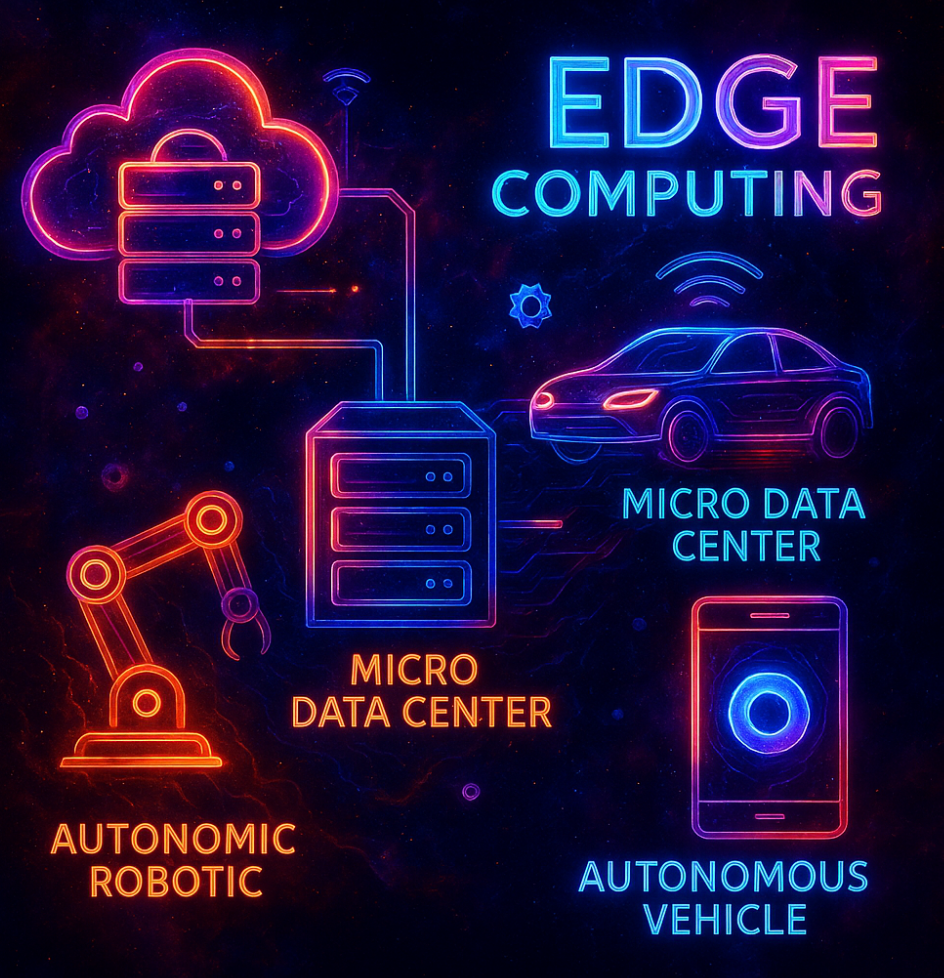
In an age where data moves faster than decisions can be made, edge computing is shifting the game. It’s not just another IT upgrade — it’s a reimagining of how we process, respond to, and capitalize on information in real time. From smart factories to autonomous vehicles, the edge is no longer optional — it’s essential.
Edge computing is a transformative approach, redefining how data processing is carried out by moving it closer to where the data originates. Think of it like this: instead of data traveling long distances to be processed in a centralized location, it’s handled nearby, right where it’s created. This not only speeds things up but also reduces the amount of data that needs to be sent over networks.
Imagine edge computing as a neighbor who can offer speedy help because they’re just around the corner. In comparison, cloud computing is like calling someone far away; it takes more time for your request to be processed. By being closer, edge computing cuts down on delays, known as latency, and lessens bandwidth use, making it great for real-time applications where every millisecond counts.
Micro data centers play a big role here. These small, yet powerful units perform computing tasks on the edge, handling vast amounts of data swiftly and locally. They can be positioned wherever data is generated, whether it’s a factory floor or city street corner. This setup is anticipated to grow significantly as we edge towards 2025, driven by the explosion of connected devices demanding instant data processing without lag.
This move towards processing data right at its source isn’t just about being fast. It’s about efficiency and capacity management. As we pile on more smart gadgets and systems, the networks get crowded. Edge computing helps avoid congestion by lessening the load. It’s like having a personal trainer at your local gym instead of traveling across town to a busy fitness center.
As for what’s coming? Expect even more robust growth and sophistication in edge computing by 2025. With the rise of Internet of Things (IoT) devices, expect a spike in demand for edge solutions. The way we process data is being reimagined, carving a path to smarter, quicker digital interactions.
Powering the Future: Edge Computing Real-World Applications
Edge computing is a powerhouse for innovation, bringing real-world applications into the realm of possibility. Take autonomous vehicles, for instance. These cars require split-second decision-making, processing massive amounts of data in real-time to ensure safety and efficiency. Edge computing allows these vehicles to swiftly analyze information locally, drastically reducing delay when compared to traditional cloud-based models.
In industrial settings, edge computing is fueling what’s known as the Fourth Industrial Revolution. Smart manufacturing uses sensors and AI-driven technology in factories to optimize operations. By processing data right on the manufacturing line, businesses can react immediately to changes, improving production efficiency and minimizing downtime.
Healthcare, too, is undergoing a transformation with edge technology. Remote patient monitoring systems benefit immensely from edge computing’s ability to handle data where it’s collected. This leads to quicker alerts and responses in critical situations, ultimately improving patient outcomes. In agriculture, similar tech helps in managing resources better, enhancing crop yields by providing real-time environmental data and insights.
AI workloads get a significant boost through edge computing. At the heart of advancements in AI, edge computing enables intelligent applications to operate with independence and speed in the field. This sets the stage for decentralized AI, where devices can make informed decisions without having to “phone home” to a central server, unlocking new potentials across various sectors.
As we look to 2025, the explosion of edge-enabled devices means more industries will adopt these solutions, integrating them into their ecosystems. Devices will become smarter, environments safer, and operations more efficient. Edge computing stands at the forefront, powering these cutting-edge applications that are reshaping our world.
Navigating the Challenges: Securing Edge Computing for a Resilient Tomorrow
While edge computing opens up a world of opportunities, it doesn’t come without hurdles, particularly when it comes to security. With numerous distributed points, ensuring data protection becomes a complex puzzle. Each device or data center connects to a larger network, expanding the potential for security vulnerabilities. To mitigate risks, deploying robust encryption methods and stringent access control measures are crucial.
Managing updates across countless devices presents another challenge. Unlike centralized cloud systems where updates roll out uniformly, edge devices might be scattered across different locations, from rural fields to dense urban areas. The key to tackling this issue lies in implementing advanced update frameworks that ensure seamless patching with minimal disruption, automating the process wherever possible to keep everything running smoothly and securely.
Integration of edge computing into existing infrastructures also poses a challenge but offers rewarding benefits when done right. Aligning these new systems with legacy networks requires careful planning and execution. Businesses need to adopt flexible integration strategies, ensuring compatibility and efficiency while upgrading their IT ecosystems.
Looking at scalability and maintenance, the future demands innovative solutions that allow edge systems to grow alongside the boom in connected devices. This includes automation in maintenance processes, predictive analytics for anticipating failures, and ensuring that systems remain robust as they expand.
Innovations aimed at overcoming these challenges will be pivotal by the end of 2025. The path forward involves creating resilient architectures that support a diversified edge landscape. New strategies will be key in addressing these hurdles, paving the way for a future where edge computing not only endures but thrives.
Conclusion
Businesses that want to stay competitive need to move beyond the cloud-alone mindset. The time to explore edge strategies is now — assess your data flow, identify latency pain points, and consider how edge solutions can transform your responsiveness, efficiency, and innovation potential. Those who embrace the edge will find themselves operating at the forefront of the next digital evolution.
🧠 Edge Computing: 3-Point FAQ
1. What is edge computing, and how is it different from cloud computing?
Edge computing processes data closer to where it’s generated—think factory floors, vehicles, or street corners—instead of sending it to a distant cloud server. This local processing reduces latency, eases bandwidth demands, and allows for real-time decision-making. If cloud computing is like calling customer support, edge computing is your tech-savvy neighbor solving the issue on the spot.
2. Where is edge computing actually being used today?
Real-world applications are everywhere:
– Autonomous vehicles use edge to make instant driving decisions.
– Factories leverage it for smarter, faster production lines.
– Healthcare benefits from real-time patient monitoring.
– Farms use it to adjust irrigation based on live weather data.
And in all of these, the edge allows AI to work without needing constant input from central servers—making the tech faster and more independent.
3. What are the main challenges of edge computing?
The perks are real, but so are the hurdles:
– Security risks multiply with more devices at the edge.
– Updates and maintenance can be tricky when devices are scattered.
– Integration with older systems takes smart planning.
Solutions like automated updates, edge-native security, and predictive maintenance are emerging fast to tackle these. By 2025, expect edge strategies to be as much about resilience as performance.
Edge computing’s role in real-time data processing is becoming increasingly vital, especially as the volume of connected devices continues to explode. What’s most compelling is how it decentralizes data handling, reducing reliance on cloud latency and enhancing responsiveness across industries. I wonder how businesses will handle the complexity of managing edge infrastructure at scale, particularly when balancing speed with security and compliance. The shift toward localized processing could also reshape how data sovereignty is approached globally. It’s an exciting evolution, but it seems like organizations will need to rethink traditional IT strategies to fully capitalize on its potential.
Hi Slavisa, thanks for taking the time to drop a comment in here.
You’ve identified some of the key tensions emerging in edge computing. The decentralization advantage is clear — speed, reduced latency, and smarter local decision-making. No surprise – I am a big fan of Edge. But as you pointed out, scaling that infrastructure comes with a new layer of complexity: orchestration, security, compliance, and even physical maintenance across distributed nodes. We are seeing a lot of solutions coming to market in tis space like Schneider Electric’s EcoStruxure.
I’m especially interested in your point on data sovereignty. As edge adoption grows, we’re likely to see more region-specific policies and governance frameworks emerge, forcing organizations to rethink where and how data is processed — not just for performance, but to remain compliant in a fragmented regulatory landscape.
The good news? With advances in containerization, AI workload optimization, and autonomous system management, we’re seeing tools mature to meet the challenge. But this shift does require IT leaders to move from centralized control toward more decentralized, adaptive strategies — essentially transforming infrastructure into a living, learning ecosystem.
For a deeper dive into how edge computing is reshaping real-world applications — from autonomous vehicles to smart manufacturing — I recently explored this in detail here
One area I’d love to hear more about is the skills gap. As edge computing becomes more prevalent, are we adequately preparing the workforce to manage and secure these distributed systems? It seems like a blend of traditional IT skills (networking, security) combined with newer areas like IoT device management and potentially even AI/ML expertise will be crucial.
Also, while the article touches on security challenges, perhaps a deeper dive into specific security protocols and best practices for edge deployments would be beneficial. Things like zero-trust architecture, secure boot processes for edge devices, and robust key management strategies come to mind.
Overall, a very informative piece! I’m excited to see how edge computing continues to evolve and reshape industries in the coming years. Thanks for sharing!
Thanks for the thoughtful feedback @jJnnette! You’re absolutely right—the skills gap is a critical piece of the edge computing puzzle. As the ecosystem grows more complex, we’re seeing a real need for hybrid expertise that spans traditional IT, IoT, and increasingly, AI/ML. Upskilling the workforce to manage and secure these distributed systems is a challenge we can’t afford to overlook. I liken this to the changes in the utility sector over the past 2 decades – moving from mostly manual legacy processes into a world of smart grid was a huge change and led to a lot of challenging skill gaps.
On the security front, we are aligned that there’s room for a deeper dive. Protocols like zero-trust architecture, secure boot, and strong key management are becoming essential, especially as edge deployments scale up. We’re planning a follow-up piece that explores these areas in more detail—stay tuned!
I appreciate you engaging with this post. It’s engagement like this that expands the thinking and makes posting worth while.