
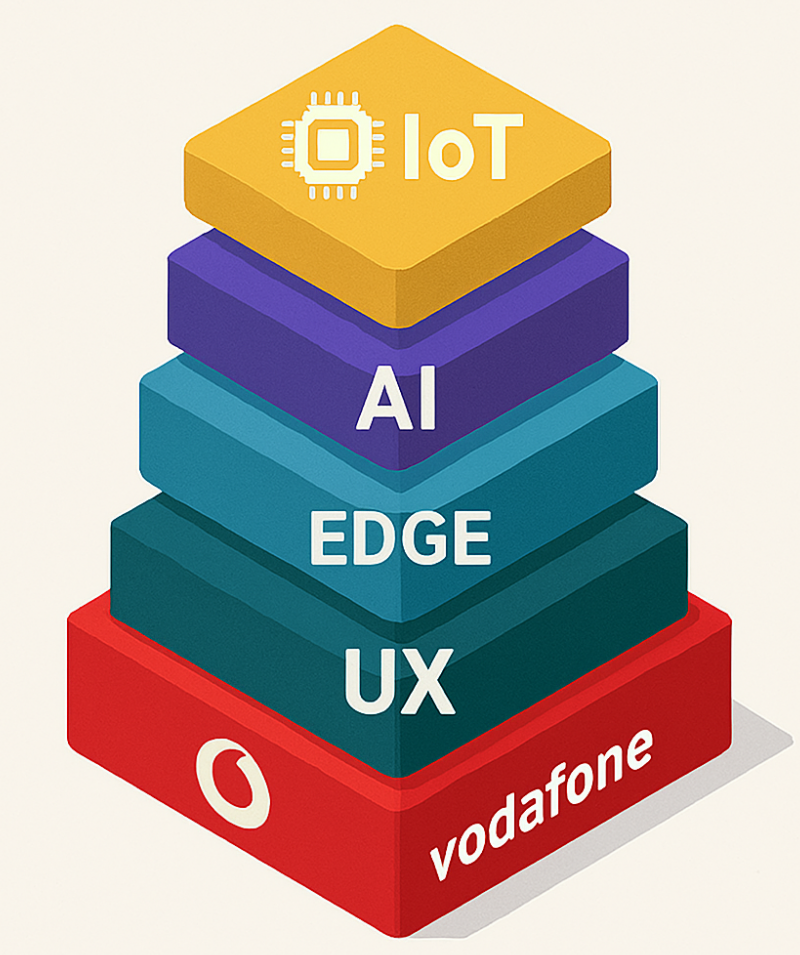
This is Part 1 of a three-part series exploring how modular tech is reshaping telecom strategy, architecture, and sustainability. If you missed our earlier take on Vodafone’s modular pivot, it sets the stage for what’s unfolding across the industry you will find it here. It sets the stage for what’s unfolding across the industry. As products morph into platforms and spin-offs gain strategic weight, the rules of engagement are changing fast.
The telecom industry isn’t just upgrading—it’s evolving. Modular tech stacks are redefining how giants like Vodafone operate, compete, and innovate. This shift isn’t cosmetic; it’s foundational. As products morph into platforms and spin-offs gain strategic weight, the rules of engagement are changing fast. Can legacy Telcos keep up?
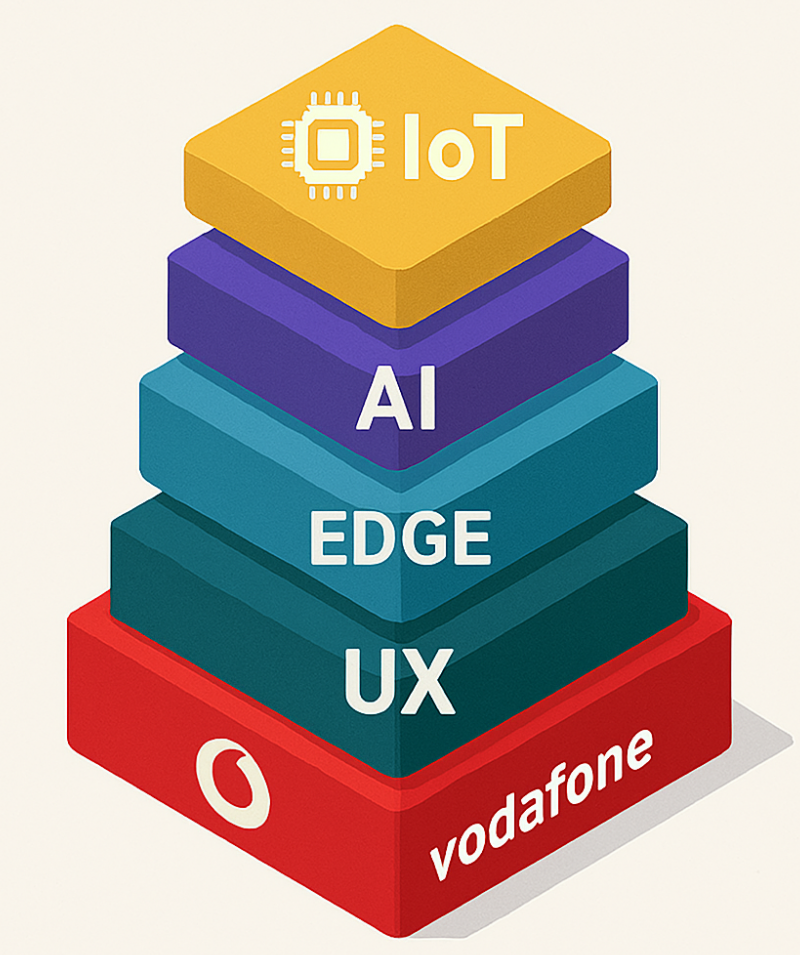
Vodafone anchors the stack – the signal rises. Modularity with momentum
The telecom industry is hitting a new stride with modular tech stacks. This isn’t just about installing the latest tech gadgets or fanciest upgrades. It’s a shift that’s changing how telecom giants operate at their core. Think of it as giving the whole operation a fresh set of legs to run with. It opens up new possibilities for what these companies can do and how fast they can do it.
Take Vodafone, for instance. Their recent move to embrace modular tech has positioned them at the forefront of digital transformation. Their journey shows how strategic choices can put a wedge between old ways of doing business and new-era strategies. Vodafone’s approach to modular tech isn’t about being ‘trendy’. It’s about rewriting their playbook on how to compete and win in a tech-heavy world and on a global scale.
A big part of this transformation comes from the blurring lines between products and platforms. In the past, a product was just that—a standalone piece offering a set of functions. But with modularity, these products evolve into platforms, ecosystems even, complementing and enhancing each other. Companies now face the puzzle of determining when a product truly becomes a platform. The lines are fuzzy, but cracking this code is crucial for keeping up with industry leaders.
Modular tech fosters more rapid innovation and integration, positioning companies to scale more effectively. But it also brings questions about independence and identity. Is it a genuine evolution of what a product can offer, or merely a new hat on an old outfit? This is where strategic decisions come into play—decisions that separate leaders from followers.
Vodafone’s example shows how a strategic use of modular tech can carve out significant market opportunities. For companies willing to brave this new world, the road isn’t without its challenges, but the potential rewards are immense. By watching how Vodafone and others navigate these waters, businesses in telecom can glean valuable insights to fuel their own journeys.
Identity Redefined: The Strategic Implications of Platform Spin-Offs
In the landscape of telecom, platform spin-offs are more than an operational tweak—they’re strategic moves that redefine brand identity and market stance. By moving towards platform ecosystems, companies turn product suites into a dynamic entity capable of reshaping industries. This development isn’t simply a technical upgrade; it’s about crafting a new narrative that aligns with broader business goals. This shift demands a fresh way of thinking, a spot where strategy meets innovation.
True independence in this context goes beyond a simple rebranding exercise. It requires businesses to see modular architecture not as a collection of detached parts but as a unified force driving innovation and growth. The challenge is real—how can companies ensure strategic autonomy without losing the cohesion and power of their brand identity?
For a platform spin-off to succeed, there’s a need for more than just a clear technical separation. The journey involves defining a new space in the market, sharpening brand positioning, and building an infrastructure ready for scalability. This means digging deep into market needs, refining the brand’s voice, and aligning it with the company’s mission and vision. It’s not just about what the technology can do; it’s about creating value and excitement for customers and stakeholders alike.
Market-facing clarity holds the key—it’s what allows these spin-offs to stand out. By strategically positioning themselves, telecom giants can launch with a purpose, ensuring they connect with their audience on every level. This approach demands a detailed understanding of both internal capabilities and external market dynamics. Who am I? What problem do I solve?
As telecom ventures into the realms where modularity meets monetization, the potential for growth and expansion could be boundless. Companies must balance the tech stack evolution with a focus on agility and value creation. Modular platforms present the next frontier—a place where the technical and strategic spheres combine to foster an environment ripe for innovation.
Modular transformation is more than a technical pivot—it’s a strategic redefinition of identity, autonomy, and market relevance.
In Part 2, we’ll explore how compartmentalized tech stacks are quietly driving agility, innovation, and operational momentum—without full brand separation.
If you’ve seen this shift firsthand—or are navigating it now—drop your thoughts below. Where do you draw the line between product and platform?
Quick question on this post please, in your view, when does a product cross that line and become a true platform? Is it just about adding more features and integrations, or is it more about creating an ecosystem where other products and services can plug in and grow with it? This caught my attention but I’m not really sure I fully understand.
Hi @Jason – you’re right to ask for clarity on that boundary—it’s a crucial distinction, and I could’ve drawn it more clearly in the post (damn!!). So let me ‘fess up’ and expand a bit here.
In my opinion, a product becomes a true ‘platform’ not just by stacking features or integrations, but by enabling others to build, extend, and thrive within its ecosystem. Think of it like this: a product solves a problem; a platform creates a space where many problems can be solved—often by third parties.
The shift happens when the core offering becomes a foundation for others to plug in, innovate, and even monetize. APIs, developer tools, marketplaces, and modular architecture all play a role—but the real signal is when value creation starts happening beyond the original team.
Shopify vs. a Custom Online Store
You build a custom store for your website. Its a product – it should sell products well, but Shopify is a platform—it lets others build plugins, themes, payment gateways, and even entire businesses on top of it. The ‘magic’ isn’t just in the features—it’s in the ecosystem that it enables to grows around it
Thanks for calling this out—your question shows how much you thought about the article – thank you. In return I’ll be more precise next time around.
MarkA
As a P.S. – if you’re into IoT, the same pattern shows up there too—platforms like Cumulocity (https://www.cumulocity.com) enable device-agnostic innovation, while vendor-specific products tend to stay siloed. Its a very specific IoT example – but this platform is a true IoT PLATFORM.
Wow, what a thoughtful dive into the nature of identity in technology—particularly within modular telecom frameworks!
You’ve captured this shift brilliantly: as products transform into interconnected platforms, “identity” evolves too. It’s not just about what a device or service does—it’s about how it defines itself within a broader ecosystem. The question of whether modularity strengthens or dilutes identity really resonated with me. You show convincingly that it’s both a strategic opportunity and a potential challenge for telecom firms navigating this new world.
I’d love to hear your take on one thing: as these modules assemble into richer platforms, how can companies preserve unique brand or product identity without losing flexibility?
Hi @Leahrae, you always manage to spot the signal in the noise—thank you! I love how you framed modularity as both a strategic flex and an ‘identity’ puzzle. Telecom’s new playground isn’t just about counting features—it’s about curating an impactful presence for our customers.
Your question’s a juicy one: how do brands maintain a distinct image when their modules are constantly remixing? I think the trick is modular storytelling. Not just what each piece does, but how it reflects the brand’s voice, values, and ‘vibe’ (its a semi famous comment from an old Aussie movie). Like Lego sets with a theme—sure, you can build anything, but the box still says “Star Wars” or “Friends.”
Visual consistency, naming conventions, and shared outcomes help. But the real magic? Intentional curation. What you choose to include (or leave out) says more about identity than any logo ever could.
I riffed on this a bit more in Episode 3—especially around how modularity can either amplify or dilute strategic clarity depending on how it’s framed. Would love to hear how you see this playing out in your world—especially if you’ve deployed modularity in your own projects!