
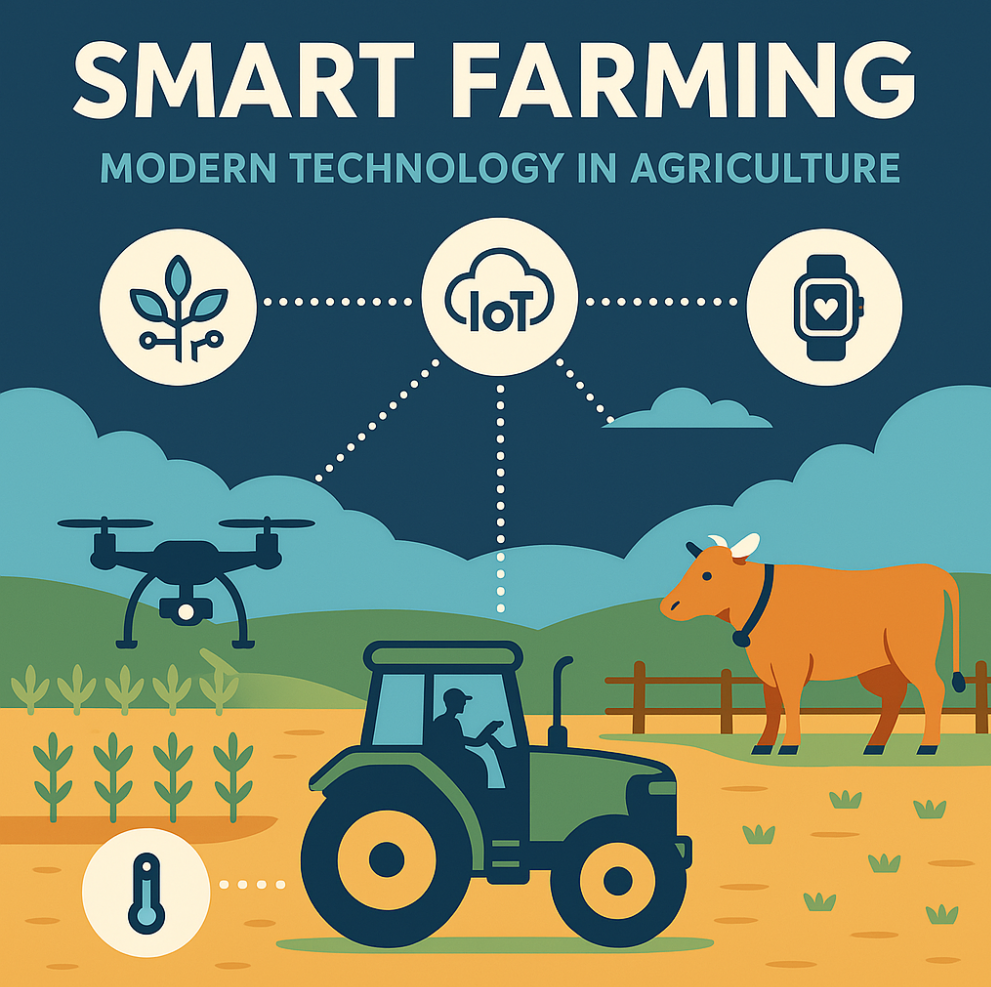
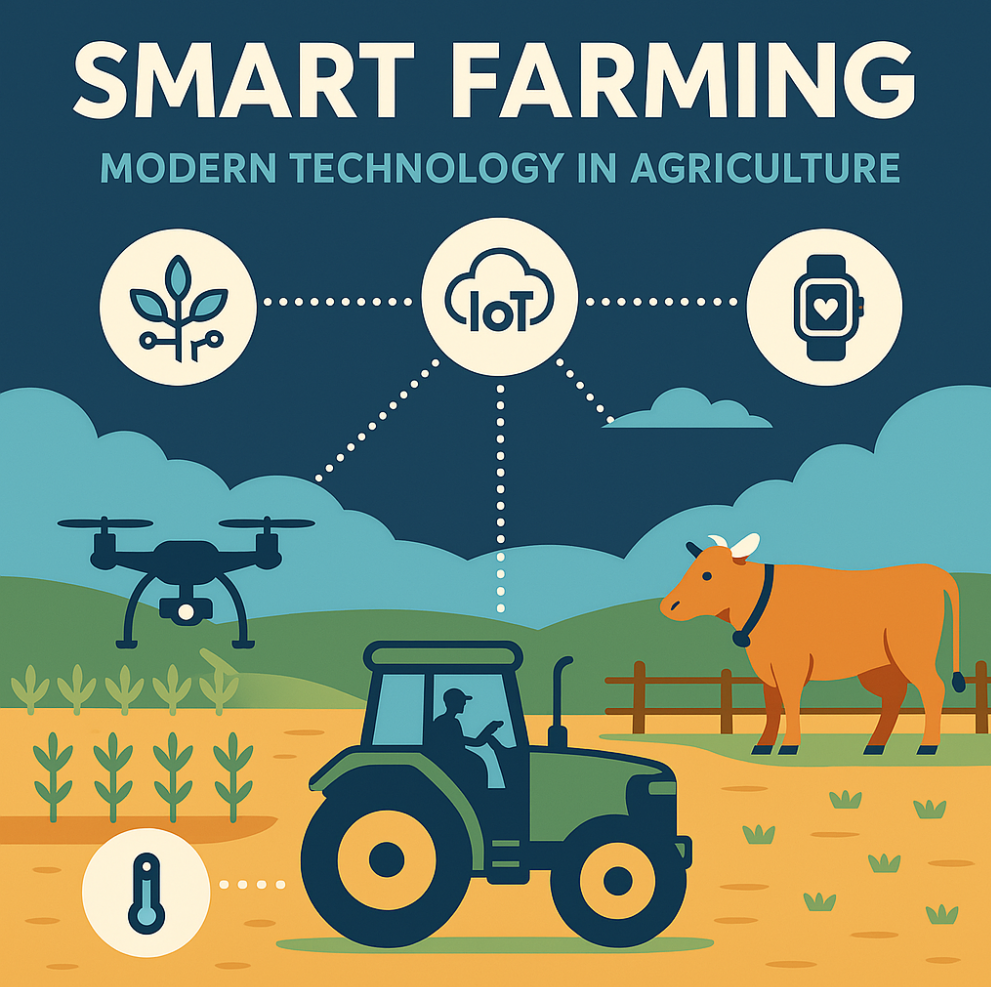
The age of pitchforks and guesswork is over. Agriculture is getting smarter—a lot smarter. With IoT, drones, driverless tractors, and wearable livestock trackers, farmers are trading in gut instinct for real-time data and automation. This isn’t some futuristic fantasy; it’s happening right now in fields and pastures across the globe and it is especially clear in Australia. From conserving water to predicting harvests with laser-like accuracy, the digital revolution in agriculture has taken root—and it’s growing fast. How far will it go?
Internet of Things (IoT) has started to transform agriculture into something that almost sounds sci-fi. With precision agriculture, IoT sensors are spread across fields, gathering real-time data on soil, weather, and crop health. Farmers are now able to understand their land like never before.
These tiny devices work tirelessly, keeping an eye on soil for moisture levels, temperature shifts, and even signs of pests or diseases. This kind of insight helps farmers address issues before they escalate, allowing them to tailor their actions to the exact needs of their soil and plants. For instance, sensors detect soil moisture levels to optimize irrigation, wasting less water and ensuring crops get exactly what they need.
By continuously monitoring the health of crops—and even predicting the most effective times for planting and harvesting—these sensors help limit guesswork, allowing farmers to fine-tune their approaches based on the precise conditions of their land. When it comes to detecting potential problems, sensing systems can catch early signs of disease, letting farmers act fast to protect their crops and investments.
Real-world examples show how powerful this technology can be. Take a look at farms in regions prone to drought. By deploying moisture sensors, these farms have managed to cut down their water usage significantly while boosting yields. In fact, some have reported over 20% increases in crop production thanks to timely interventions informed by sensor data.
Getting started with IoT sensors doesn’t have to be complicated. Begin small by equipping just a portion of your fields, learn how the data works, and adapt it to your own farm’s conditions. Training and patience are key. With gradually expanding the use of tech, you can reap the full benefits of IoT, setting the stage for smarter, more sustainable agriculture.
Automation on the Fields: Drones and Driverless Tractors
Introducing automation to fields with drones and autonomous tractors, agriculture is stepping into a new era of efficiency and precision. These technologies work hand-in-hand to make everyday farming tasks like planting, spraying, and harvesting smoother and less labor-intensive.
Drones, for starters, are flying high above fields, capturing detailed aerial images and providing a bird’s-eye view that was once impossible without hiring top-dollar pilots with helicopters. They help monitor crops over large areas swiftly, spotting problem spots quickly and accurately applying fertilizers or pesticides thanks to their precision capabilities. This not only saves time but cuts costs and reduces chemical usage, too.
When it comes to heavy lifting, autonomous tractors are game-changers. They navigate fields using GPS technology, executing tasks like tilling, planting, and even weeding with surgical precision. Imagine these driverless giants working through the night, getting the job done faster without human error creeping in. The efficiency bump comes from cutting labor costs while boosting productivity.
What’s fascinating about these advancements is how they seamlessly blend with existing farm operations. You don’t need to throw out the old playbook but instead integrate new tech into traditional practices for greater results. Farms using drones alongside autonomous tractors report less wear and tear on machines and more harmonious workflows.
Adopting these technologies may seem daunting, but starting small could be the key. Whether it’s trialing a single drone for aerial surveys or a part-time autonomous tractor use, there’s room for gradual integration. Consider local partnerships or technology consultants to guide the setup process and ensure the tech works harmoniously with your specific needs.
Smart Livestock Management: Wearable Technologies
IoT has expanded beyond fields and crops to include revolutionary changes in livestock management. Wearable technologies for animals are becoming the go-to tools for ranchers and farmers who want better insights into herd health and efficiency.
IoT in farming is evolving quickly, not just in expected ways but in some truly creative ones too. For a look at some surprising uses of IIoT in agriculture—from beehive monitoring to autonomous vineyard bots—check out our article on Unusual Applications of IIoT in Agriculture.”
These wearables work much like fitness trackers for humans, but they’re specifically designed to suit cattle, sheep, and other livestock. Fitted with sensors, they measure vital signs like heart rate, temperature, and even movement patterns. This real-time data is invaluable for spotting health issues before they spiral into something costly or severe.
Livestock managers can track the location and well-being of their animals at any time. This makes it easier to implement preventative care measures, reducing the risk of widespread illness within herds. With these technologies, farmers can pinpoint exactly when an animal is sick or stressed, allowing for immediate care and ultimately saving on veterinary costs.
Moreover, these wearables enhance traceability. They help keep track of individual animals’ histories, which is a major advantage when selling livestock or complying with food safety regulations. Farmers have reported increased buyer trust and better prices, thanks to detailed records enabled by wearables.
For those considering this tech, starting out doesn’t have to mean going all-in right away. Test out a small segment of your herd with these devices to gauge the kind of data they provide. Familiarize yourself with how to interpret the information, and consider how it accommodates your current management practices. Collaborations with tech providers for training could smooth the transition.
Analyzing Data for a Greener Future: Sustainability and IoT
Utilizing data analytics is crucial for eco-friendly farming practices that are both efficient and sustainable. By leveraging detailed insights from IoT devices, farmers can make smarter decisions about resource use, ultimately leading to less environmental impact.
Data analytics is all about taking the massive amounts of information collected by IoT sensors and crunching the numbers to forecast future outcomes. Whether it’s predicting crop yields or optimizing fertilizer applications, these analytics help tailor management strategies to each specific area of a farm.
One significant benefit is improved water management. By understanding detailed soil moisture content and weather patterns, irrigation can be timed precisely, conserving water without sacrificing crop health. Some farms report saving up to 30% of their water usage, a clear win for sustainability.
Reducing chemical inputs is another plus. With precise data on pest presence and disease risk, chemicals are applied only where and when absolutely needed, lowering overall usage and preventing unnecessary run-off into ecosystems.
The adoption of these technologies isn’t without hurdles. Rural connectivity issues and the initial cost can be barriers, as well as the need for proper training to understand and apply analytical insights effectively. Collaborating with tech experts or agricultural extension services can provide pathways to overcoming these challenges.
As we continue forward, embracing these technologies means contributing positively to the environment while making sure agriculture remains sustainable and productive. It’s a smart approach to feeding a growing population without compromising the planet’s health.
🌾 Conclusion:
Smart farming isn’t about replacing farmers—it’s about empowering them. With IoT-driven insights and intelligent automation, agriculture is becoming more sustainable, more efficient, and more resilient. There are hurdles—connectivity, cost, and learning curves—but the benefits are undeniable. The future of farming won’t be decided by who has the biggest tractor, but by who’s making the smartest decisions. And thanks to IoT, those decisions are getting sharper by the byte.
🌱 Related Reads:
- Unusual Applications of IIoT in Agriculture
Discover the unexpected ways IIoT is transforming farming—from beehives to mushrooms. - Industrial IoT in Food Monitoring
See how IoT is reshaping the food supply chain, from field to fridge. - Building Intelligent IoT Systems Using Edge AI
Dive into how edge computing makes real-time agricultural decision-making possible—right from the field.
This is a truly eye-opening article that showcases just how far agriculture has come—and where it’s heading. The integration of IoT into farming isn’t just a technological upgrade; it’s a complete mindset shift in how we manage resources, monitor environments, and respond to challenges in real time.
The section on precision agriculture and moisture sensors really hits home. Water is a limited resource, especially in drought-prone regions like Australia, and being able to conserve it while actually increasing yield is one of the strongest arguments in favor of IoT adoption. It turns farming from reactive to proactive, which is a huge leap forward.
I also found the point about wearable tech for livestock fascinating. It’s easy to overlook animals in tech conversations, but this kind of tracking not only improves animal welfare but also enhances food traceability—something increasingly important to consumers.
Overall, smart farming seems less about replacing human intuition and more about sharpening it with data. It’s not about tech for tech’s sake—it’s about producing more with less, and doing it sustainably. This article does a great job of showing how innovation and tradition can work side by side.
Thank you Linda for your reaction to this post —you’ve captured the spirit perfectly. Your point about smart farming being a mindset shift is ‘bang on’. It’s exactly that blending of tradition with data-driven insight that’s fueling real, sustainable progress in the ag sector.
I’m especially glad the sections on moisture sensors and livestock wearables stood out for you. Like you said, it’s easy to miss how transformative these tools are—not just for productivity, but for animal welfare and food transparency, too. The fact that you drew that connection speaks to your deep understanding of the topic – and a topic very dear to me as its a key part of my ‘day job’.
Interactions like this that make sharing these insights so rewarding. Would love to know if you’ve seen any interesting examples of smart agtech making a difference in your area!
Mark,
Smart farming is more than just gadgets in the field, it’s a whole new way of making crops smarter. Farmers today are using sensors in soil and leaves, automated drones, and even ground robots to capture real-time data on moisture, nutrients, and temperature. A key benefit is precision, imagine an irrigation system that knows exactly when to water, or a drone that spots early signs of disease, saving water, cutting waste, and boosting yields. Initiatives like the NSF-backed IoT4Ag centre are leading the charge, even prototyping biodegradable sensors that disappear after use. But the road isn’t always smooth, technology costs, spotty rural connectivity, and the workload of wrangling all that data can be real hurdles to overcome.
It’s an exciting transformation, but one that requires more than just the latest tech, it demands collaboration. Engineers, agronomists, policymakers, ecologists and farmers are coming together to create systems that are not just smart, but sustainable and scalable. When soil sensors feed into actionable dashboards, and when that data guides everything from fertiliser use to harvest timing, agriculture becomes not just reactive, but predictive. But to truly unlock this future, infrastructure gaps need bridging and farmers need reliable support, whether through training, funding, or shared platforms. When all those pieces align, we’re not just going to be improving farming, we’re re-engineering it for a resurging, nourishment-focused global future .
Kind regards,
Martin
Hi Martin,
Appreciate your well-rounded take — you’ve captured both the promise and the practical realities of smart farming beautifully. Clearly you have a grip o this topic – that’s excellent and I appreciate you taking the time to comment!
The way you highlighted IoT4Ag’s biodegradable sensors shows just how deep innovation is reaching. Your point about predictive agriculture; moving from reactive decisions to proactive ones is 100% on the money. This is a “game-changer” not only for yields but for potential long-term sustainability.
You’re also correct that this isn’t just about technology, it’s about ecosystems of collaboration. That intersection of agronomy, engineering, policy, and ecology is where real impact happens. I’d add that digital literacy and data ownership are emerging conversations, too. These have been traditionally a long way from farmers day to day topics – but they are getting across these issues fast. When farmers understand, control, and benefit from their data, the value of these tools increases exponentially, as does their willingness to engage.
Thanks for contributing such a thoughtful input to the discussion. Would love to hear your thoughts on how shared platforms might evolve — this is a great approach to reduce costs in a VERY cost sensitive segment – do you see open standards playing a role here?
Cheers,
Mark