
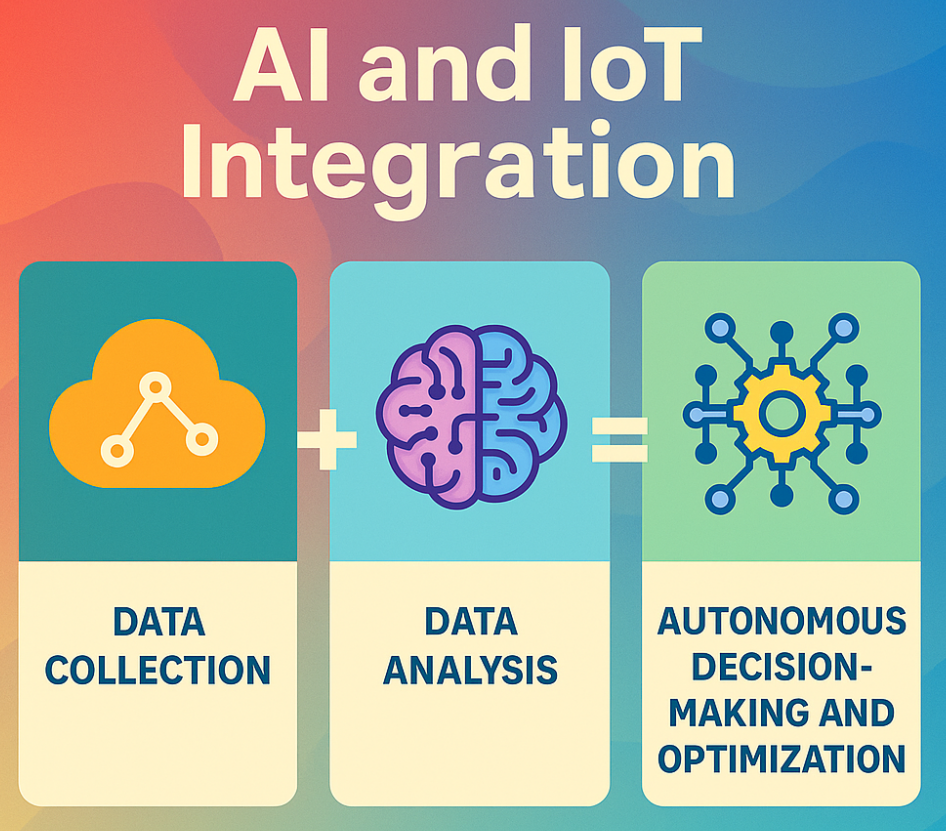
Artificial Intelligence (AI) and the Internet of Things (IoT) aren’t just transforming tech — they’re reshaping how we live, work, and interact with the world around us. AI makes things smart, while IoT connects them. This synergy creates intelligent automation and predictive capabilities — the true value of integration. When you put these two together, it’s like turning on a lightbulb over a whole digital universe of possibilities. But to really appreciate this synergy, you gotta dive into what each brings to the table.
AI is all about creating systems that can mimic human intelligence. Think of it like giving machines eyes to see, ears to listen, and brains to think, learn, and even make decisions. On the other hand, IoT is the network of interconnected devices, from your smart watch to your home security system, all chatting away through the internet. When AI hops on board with IoT, the result is smart systems that not only gather data but actually learn from it. Picture your smart fridge not just ordering milk when you’re low, but also suggesting recipes based on what’s inside.
Real-world examples make this combo shine. Smart homes become intuitive places, adjusting lighting and heating based on your mood and habits. Healthcare, too, reaps the benefits—think of monitors that predict health issues before they arise, keeping an eye on vital signs and learning from them. Even cities get a boost, with traffic lights that adapt to real-time traffic conditions, cutting down on congestion and pollution. John Deere for example uses AI-powered IoT in precision agriculture to monitor soil conditions and adjust planting patterns in real time, boosting yield and sustainability.
At the core, integrating AI with IoT boils down to leveraging AI’s ability to analyze and learn from the data generated by IoT devices. This way, the systems aren’t just passive observers—they’re active participants that tweak their behavior based on patterns and predictions. However, unleashing this potential requires acknowledging some challenges and strategizing on the best ways to blend these technologies effectively.
Navigating the Complexities: Challenges in AI-IoT Integration
Blending AI with IoT is no walk in the park. It’s like piecing together a complex puzzle where each piece needs to fit perfectly with the next for the big picture to make sense. One of the biggest hurdles is dealing with data privacy and security. IoT devices are like little information sponges, soaking up data all day long. While AI processes this data, the risk of breaches or misuse looms large, making robust security measures non-negotiable.
Interoperability is another thorn in the side of seamless integration. With countless devices operating on different protocols and standards, getting them to work harmoniously can be quite the balancing act. It’s not just about connecting devices; it’s about making sure they actually communicate effectively and efficiently. This often requires establishing common standards or protocols that various manufacturers can agree upon. Examples of these are MQTT, OPC-UA (commonly used in IIoT) and the merging Matter Protocol that is gaining traction in smart home ecosystems.
The heavy lifting doesn’t stop there. AI processes are resource hogs. They require significant computational power, which can be a strain on IoT devices, especially those running on limited hardware. It’s like asking a small engine to run a big machine—it takes smart optimizations to make it work without burning out.
And then there’s the issue of handling and storing the mountain of data these smart systems produce. It’s not enough just to collect data—you have to know what to do with it. This means developing solutions to store and manage large volumes of data while ensuring quick access and analysis for timely decision-making. If only I owned a data center or two.
Despite these challenges, overcoming them is key to unlocking the transformative potential of AI and IoT integration. Keeping these hurdles in mind as you embark on your integration journey will help pave the way for smarter, more efficient systems.
Best Practices for Seamless Integration and Deployment
Integrating AI with IoT doesn’t have to be an uphill battle if you know where to start. Let’s lay down some tried-and-tested approaches that can lead to success. First off, having a clear strategy is crucial. This means understanding the specific needs of your systems and setting clear objectives for what the integration should achieve. Planning ahead ensures that resources are used efficiently and that potential hiccups are anticipated before they become real problems.
Security should never be an afterthought, especially when you’re dealing with the massive amounts of data that AI and IoT systems churn out. Implementing strong security measures and strict data privacy protocols right from the start is essential. This not only protects sensitive information but also builds trust among users who are increasingly concerned about their privacy.
Interoperability issues can be a major roadblock, but they’re not impossible to solve. Adopting standards and protocols that promote seamless operation between devices is a step in the right direction. The goal is to create an ecosystem where devices communicate effectively, regardless of their make or model, which requires collaboration and compromise among industry players.
Leveraging cloud computing and edge solutions can ease the strain on IoT devices, allowing AI processes to run more smoothly. Cloud computing offers the computational power needed for heavy AI tasks, while edge computing can keep data processing closer to where it’s needed, reducing latency and improving performance.
Don’t underestimate the power of collaboration. Innovation thrives when industries come together, sharing knowledge and resources for a common goal. Encouraging partnerships and cross-industry initiatives can lead to breakthroughs that might not happen in isolation. Working together paves the way for fresh ideas and novel solutions, driving advancement and growth in AI and IoT integration.
As AI and IoT continue to mature, the question isn’t if they’ll transform our world — but how fast and how far. The key lies in thoughtful integration, ethical design, and shared innovation.
This is a well-explained and timely post! The section on challenges in AI-IoT integration really caught my attention. As technology evolves, I can see how issues such as data security, interoperability, and processing constraints become increasingly critical bottlenecks. It’s eye-opening to think about how much coordination is required behind the scenes to make AI-powered IoT solutions work seamlessly.
I do wonder, though—how do organizations typically approach ethical concerns when training AI models using IoT-collected data, especially in sensitive environments like healthcare or smart homes? Also, are there any standardized frameworks or regulatory guidelines emerging to help manage the complexities of AI-IoT governance across industries?
Thank you for shedding light on this fascinating topic! Looking forward to learning more.
Thank you Alice for the kind words and for raising such important points — I’m really glad the challenges section stood out to you! You’re absolutely right: the “magic” of seamless AI-IoT solutions hides a lot of complex coordination under the hood — from data integration to real-time responsiveness and system-wide trust.
You’ve touched on a crucial issue with your question about ethics and governance. In sensitive environments like healthcare and smart homes, ethical AI practices are becoming a top priority. Organizations are starting to adopt privacy-by-design approaches, ensuring data anonymization, secure transmission, and user consent protocols are embedded from the outset.
In terms of frameworks, there are several emerging efforts to guide ethical AI-IoT integration:
OECD AI Principles and the EU AI Act provide broad ethical and legal guidance.
ISO/IEC JTC 1/SC 41 is working on IoT standards, with growing focus on trust and security.
In healthcare, HIPAA in the U.S. and GDPR in the EU are often referenced when aligning data practices with compliance.
That said, many organizations still face a fragmented landscape — so cross-industry collaboration is essential to build common, enforceable governance models.
Thanks again for the great comment — it’s conversations like this that help push these topics forward! Let me know if you’d like me to share links to a few of these frameworks.