
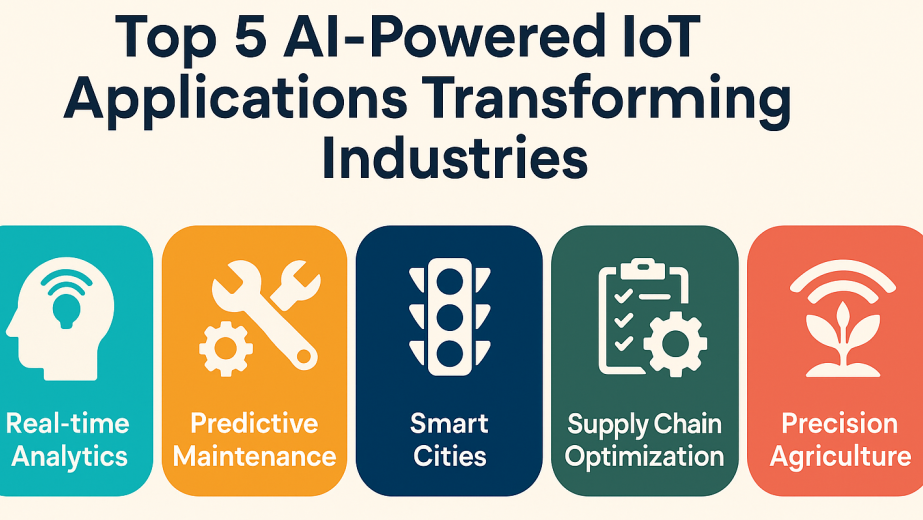
In today’s digital world, the convergence of Artificial Intelligence (AI) and the Internet of Things (IoT) is reshaping industries by transforming raw data into real-time intelligence. This partnership is especially impactful in transforming raw IoT data into actionable insights that businesses can use to make informed decisions. When IoT devices collect data, AI steps in to analyze this data in real-time, turning it into valuable information that can drive business strategies and enhance operational processes.
“By 2025, over 75% of enterprise data will be processed outside the traditional data center or cloud — at the edge.”
— Gartner, Edge Computing Trends 2023
One of the key advantages of using AI with IoT is its ability to process data at the edge. Edge computing enables data analysis to occur closer to the source, reducing latency and allowing for faster decision-making. This means businesses can act on insights almost instantaneously, which is critical for operations that require immediate response, such as emergency services or automated manufacturing processes. As Forbes recently noted, localized AI processing is helping industries move from reactive operations to predictive, real-time systems that support mission-critical applications.
Different industries are already seeing significant benefits from these real-time insights. For example, in retail, AI-enhanced IoT devices help retailers personalize promotions, optimize store layouts, and improve real-time inventory management. In healthcare, wearable IoT devices powered by AI can monitor patient vitals 24/7 and alert clinicians to anomalies before symptoms appear—supporting earlier intervention and improved outcomes
Being able to harness these insights isn’t just about having the right technology. It’s about ensuring that this technology is integrated into your business processes effectively. Identifying areas where timely data can boost efficiency or improve customer satisfaction is the first step. Once pinpointed, businesses can work on setting up the necessary infrastructure to support real-time data processing and analysis.
Embracing the combination of AI and IoT for real-time insights isn’t just about keeping up with technological trends. It’s about leveraging these advancements to stay one step ahead in today’s fast-paced market. Industries looking to excel need to understand and implement these systems now, because the benefits of actionable intelligence are too significant to ignore.
Ensuring Efficiency: Predictive Maintenance and Operational Excellence
In every sector where machinery and equipment play a vital role, keeping them running smoothly is a top priority. This is where predictive maintenance, powered by AI and IoT, is changing the game. By continuously monitoring equipment health through IoT sensors, AI can detect even the slightest anomalies that might indicate an upcoming failure.
Predictive maintenance isn’t just about repairs; it’s about understanding equipment well enough to foresee and prevent downtime. Imagine a manufacturing plant where equipment sensors feed data to AI systems to predict when a machine requires maintenance, long before the first sign of trouble. This proactive approach can save significant costs and reduce operational downtime.
Real-world applications of predictive maintenance are already paying off. In the energy sector, for instance, AI has been used to predict failures in wind turbines, leading to substantial savings on repairs and unplanned outages. According to a case study published by McKinsey, predictive maintenance has helped industrial firms reduce maintenance costs by up to 30% and eliminate breakdowns by 70%. Similarly, manufacturing companies use this technology to avoid unexpected machine breakdowns, thus maintaining continuous production flows and meeting delivery deadlines.
Getting started with predictive maintenance involves assessing which assets are critical to your operations and the costs associated with their downtime. Once identified, deploying IoT sensors to track parameters like temperature, vibration, and wear can provide the necessary data for AI analysis. Investing in these systems can lead to a seamless and efficient operational environment, ultimately enhancing productivity and profitability.
The push towards operational excellence through AI and IoT in maintenance isn’t a futuristic concept; it’s a practical reality that’s delivering measurable results. By adopting predictive maintenance, industries can experience smoother operations, better asset longevity, and a substantial boost in their bottom line. Investing in these technologies is an investment in the future of your operations.
Evolving Urban Landscapes: From Smarter Cities to Enhanced Safety
The rapid urbanization seen in cities around the globe necessitates innovative solutions to manage resources efficiently. AI and IoT are at the forefront of transforming urban landscapes into smart cities, improving not only functionality but also quality of life for residents. With AI, urban planners can better understand and optimize the complex systems that power cities.
Traffic management is one prominent area benefiting from this tech combo. Smart traffic lights, equipped with IoT sensors, can adapt in real-time to traffic conditions, reducing congestion and cutting down on travel times. This adaptability isn’t just limited to traffic—all urban management systems, from waste collection to water management, can be optimized with AI to boost efficiency.
Energy management is another crucial segment where AI intervention is making cities smarter. By analyzing data from numerous sensors across city grids, AI can predict energy demand, optimize distribution, and reduce wastage. This efficient use of resources supports sustainability initiatives and reduces the environmental footprint of urban centers.
Security is also significantly enhanced in smart cities through AI-driven surveillance systems. These systems can process data from IoT-enabled cameras to quickly identify potential threats or suspicious activities, enabling a swift response from law enforcement. This proactive approach is essential in maintaining urban safety and security.
Transitioning to smart city infrastructure requires collaboration between public agencies, private companies, and citizens. Involvement from all stakeholders ensures that the technology meets community needs and that resources are effectively allocated. Cities embarking on this journey can look forward to not only enhanced efficiency but also a more sustainable, secure urban environment for their inhabitants.
From Field to Fork: Driving Innovation Across Supply Chains and Agriculture
The journey of products from manufacturing to consumers is a complex one, often prone to inefficiencies and bottlenecks. Here, AI and IoT shine by bringing transparency and optimization to supply chains, ensuring a smoother flow of goods. Companies can now track every step of the process with IoT sensors reporting location, condition, and expected delivery times. This level of insight helps identify bottlenecks and inefficiencies that can disrupt operations.
Route optimization is another area where AI excels. By analyzing traffic patterns, weather data, and real-time road conditions, AI systems can suggest the most efficient delivery routes. This not only reduces travel times and fuel costs but also minimizes carbon emissions, making logistics more sustainable.
In agriculture, AI and IoT are revolutionizing how we grow food. Precision farming techniques, supported by IoT sensors, allow for detailed monitoring of soil conditions, moisture levels, and crop growth. AI analyzes this data to recommend actions like optimal watering schedules and pest control measures, leading to improved crop yields and resource efficiency.
Examples of successful implementation are plentiful: Farmers using AI-driven analysis have reported increased yields, while supply chain companies have noted significant reductions in delivery times and costs. The integration of AI and IoT in these sectors is all about maximizing efficiency, sustainability, and profitability.
For businesses looking to harness this technology, it’s crucial to start by evaluating existing processes to pinpoint areas that could benefit from greater visibility or more efficient resource use. By investing in the right tools and technologies, companies in agriculture and supply chain management can unlock unprecedented opportunities for innovation and growth. As AI and IoT continue to evolve in tandem, businesses that embrace their full potential will be best positioned for resilience, agility, and long-term competitive advantage.
AI-powered IoT has huge potential—I’ve seen it firsthand in projects where predictive sensors helped catch issues before they became major problems. This kind of real-time responsiveness is a game-changer across industries. In my opinion, the challenge now is balancing innovation with data privacy and system reliability. Have you faced any struggles integrating AIoT into your workflow?
Thanks so much for sharing your experience Kiersti. It’s great to hear from someone who’s seen AI-powered IoT in action firsthand! I completely agree: the real-time responsiveness and predictive insights are game-changers, especially when it comes to preventing costly downtime or safety risks.
You raise a very important point about finding the right balance between pushing innovation forward and maintaining data privacy and reliability. It’s definitely one of the biggest challenges for organizations adopting AIoT at scale.
In my experience, integrating AIoT often comes with a learning curve — aligning existing infrastructure, training teams, and ensuring secure data flows can be tricky at first. But with a clear roadmap and phased implementation, it becomes much more manageable. You cannot beat experience on this front. Otherwise you are quickly trapped in the loop of ‘well I didn’t see that coming’.
Have you come across any best practices in your own projects that helped make the transition smoother? I’d love to hear more about what worked well for you.